
|
Prepaid items |
|
Balance sheet presentation |
||||
|
|
Time 1 |
|
Time 2 |
|
|
|
|
|
Cash outflow |
→ |
Expense |
|
|
Accrued assets: prepaid expenses |
|
|
Cash inflow |
→ |
Revenue |
|
|
Accrued liabilities: Deferred revenue |
|
|
|
|
||||
|
Accrued items |
|
Balance sheet presentation |
||||
|
|
Time 1 |
|
Time 2 |
|
|
|
|
|
Revenue (other) |
→ |
Cash inflow |
|
|
Accrued assets: Accrued revenue |
|
|
Expense (other) |
→ |
Cash outflow |
|
|
Accrued liabilities: Accrued expenses |
|
Revenue should be recognized with the debit to accounts receivable or contract assets. In contrast, "other" revenue (revenue associated with peripheral or incidental transactions) should be recognized with the debit to accrued revenue. Also see the accounting elements page for a more detailed discussion on how to distinguish revenue, other revenue and gains. Expenses should be recognized with the credit to accounts payable. In contrast, "other" expenses (expenses associated with peripheral or incidental transactions) should be recognized with the credit to accrued expenses. Also see the accounting elements page for a more detailed discussion on how to distinguish expenses, other expenses and losses. |
||||||
Revenue should be recognized with a debit to accounts receivable or contract assets.
In contrast, "other" revenue (revenue associated with peripheral or incidental transactions) should be recognized with a debit to accrued revenue.
Also see the accounting elements page for a more detailed discussion on how to distinguish revenue, other revenue and gains.
Expenses should be recognized with a credit to accounts payable.
In contrast, "other" expenses (expenses associated with peripheral or incidental transactions) should be recognized with a credit to accrued expenses.
Also see the accounting elements page for a more detailed discussion on how to distinguish expenses, other expenses and losses.
Prepaid expense, deferred revenue
1/1/X1 XYZ rented a truck from ABC for 6 months paying 120,000 in advance.
As the period was less than one year, XYZ applied the recognition exemption outlined in IFRS 16.5.a | US GAAP ASC 842-20-25-2 and did not capitalize a ROU asset and associated liability.
|
XYZ: 1/1/X1 | 1.1.X1 |
|||
Accrued assets: Prepaid rent |
120,000 |
||
Cash |
120,000 |
||
ABC: 1/1/X1 | 1.1.X1 |
|||
Cash |
120,000 |
||
Liabilities: Deferred (unearned) revenue: Rent |
120,000 |
||
XYZ: 3/31/X1 | 31.3.X1 |
|||
Expense: Distribution: Vehicle rent |
60,000 |
||
Prepaid rent |
60,000 |
||
ABC: 3/31/X1 | 31.3.X1 |
|||
Liabilities: Deferred (unearned) revenue: Rent |
60,000 |
||
Rental revenue |
60,000 |
||
Accrued revenue, accrued expenses
6/30/X1 XYZ lent ABC 120,000 and ABC agreed to repay 126,000 6/30/X2.
XYZ: 6/30/X1 | 30.6.X1 |
|||
Loans receivable |
120,000 |
||
Cash |
120,000 |
||
ABC: 6/30/X1 | 30.6.X1 |
|||
Cash |
120,000 |
||
Loans payable |
120,000 |
||
XYZ: 12/31/X1 | 31.12.X1 |
|||
Accrued assets: Accrued Interest revenue |
3,000 |
||
Other revenue: Interest |
3,000 |
||
ABC: 12/31/X1 | 31.12.X1 |
|||
Other expenses: Interest |
3,000 |
||
Accrued Liabilities: Accrued Interest expense |
3,000 |
||
At the end of X0, XYZ estimated that 10,000 worth of electricity had been consumed in storefronts in Q4.X0.
12/31/X0 | 31.12.X0 |
|||
Selling expenses: Electricity |
10,000 |
||
Accounts payable: Electricity |
10,000 |
||
The actual amount, per the invoice it received on 1/15/X1, was 11,000. XYZ paid the invoice on 1/31/X1.
Reversal12/31/X0 | 31.12.X0 recorded 1/15/X1 | 15.1.X1 |
|||
Accounts payable: Electricity |
10,000 |
||
Selling expenses: Electricity |
10,000 |
||
Selling expenses: Electricity |
11,000 |
||
Accounts payable: Electricity |
11,000 |
||
As outlined in IAS 10.8, entities adjust the amounts recognised in financial statements to reflect adjusting events. As outlined in ASC 855-10-25-1, the effects of subsequent events providing additional evidence about conditions, such as estimates inherent in the process of preparing financial statements, are recognized at the date of the balance sheet (the PCAOB link provides additional guidance).
Interpreted literally, this guidance suggests any item estimated at the end of any period should be retroactively adjusted in the subsequent period when the amount that had to be estimated has become known.
|
1/31/X1 | 31.1.X1 |
|
|
|
|
Accounts payable: Electricity |
11,000 |
|
|
|
|
Cash |
|
11,000 |
However, practitioners generally avoid such adjustments unless required by the guidance.
While IAS 10.8 suggests corrections of estimates should be made as outlined above, the examples of subsequent events requiring derecognition / re-recognition in IAS 10.9 (settlement of a court case, bankruptcy of a customer, sale of inventories below cost, determination of the cost or proceeds of assets bought or sold before period end, profit-sharing or bonus payments, errors or fraud) indicate that simple estimates of incurred expenses need not go through such a rigorous process. ASC 855-10-55-1 and ASC 855-10-55-2 provide comparable guidance.
Additionally, IAS 10 | ASC 855 apply only until the statements are authorised for issue or issued. After that, a 10,000 estimate that turns out to be 11,000 is a change in estimate, recognised prospectively (IAS 8, ASC 250). That, plus its materiality, is a strong basis for the alternative approach below.
While derecognizing / re-recognizing an estimated amount (above) may be a rigorous approach, it fails to be practical and is not required by the guidance.
As stated in IAS 10.8, entities adjust the amounts recognised in financial statements to reflect adjusting events. As outlined in ASC 855-10-25-1, the effects of subsequent events providing additional evidence about conditions at the date of the balance sheet, such as estimates inherent in the process of preparing financial statements are recognized.
Interpreted literally, this guidance suggests that any item estimated at the end of the period is adjusted, in the subsequent period, when the estimated amount becomes known. The cleanest way to make such an adjustment is to derecognize (reverse) the estimate and recognize the known amount.
However, the examples of subsequent events requiring derecognition / re-recognition in IAS 10.9 (settlement of a court case, bankruptcy of a customer, sale of inventories below cost, determination of the cost or proceeds of assets bought or sold before period end, profit-sharing or bonus payments, errors or fraud) indicate that simple estimates of incurred expenses need not go through such a rigorous process. ASC 855-10-55-1 provides comparable examples of items requiring adjustment (settlement of litigation that arose before the balance sheet date, and events representing the culmination of conditions that existed over a relatively long period), while ASC 855-10-55-2 lists those that do not (stock or bond sales, business combinations, settlement of litigation that arose after the balance sheet date, natural disasters, changes in estimated credit losses, changes in fair value or foreign exchange rates, and new commitments or contingent liabilities).
Additionally, IAS 10 | ASC 855 apply only until the statements are authorised for issue or issued. After that, a 10,000 estimate that turns out to be 11,000 is a change in estimate, recognised prospectively (IAS 8, ASC 250). That, plus its materiality, is a strong basis for this approach.
12/31/X0 | 31.12.X0 |
|||
Selling expenses: Electricity |
10,000 |
||
Accrued expenses: Electricity |
10,000 |
||
As outlined in IAS 37.11.b, accruals are liabilities for goods or services that have not been invoiced or agreed to. e.g. payroll or vacation pay or that must be estimated, such as utilities consumed but not yet invoiced. While ASC 450-20 does not formally distinguish between contingent liabilities and accruals, the same general approach is also common GAAP practice.
This implies that, for example, if an expense item that must be recognized at period end must be estimated, it should not be recognized as a payable, but as an accrued expense. While IAS 37 only addresses liabilities, by analogy the procedure would be applied to income items so that accrued income, rather than a receivable would be recognized. In practice it is also common to refer to items not yet invoiced as unbilled revenue. For example in US GAAP XBRL UnbilledRevenuesMember is defined as "Unbilled amounts due for services rendered or products shipped..."
Note: this element is distinct from UnbilledContractsReceivable because it is based on noncontract transactions. Specifically, "Unbilled amounts due for services rendered or to be rendered, actions taken or to be taken, or a promise to refrain from taking certain actions in accordance with the terms of a legally binding agreement between the entity and, at a minimum, one other party. An example would be amounts associated with contracts or programs where the recognized revenue for performance thereunder exceeds the amounts billed under the terms thereof as of the date of the balance sheet."
Also note: the IFRS XBRL taxonomy does not include an unbilled revenue item, but it would be possible to add it as an extension.
1/15/X1 | 15.1.X1 |
|||
Selling expenses: Electricity |
1,000 |
||
Accrued expenses: Electricity |
1,000 |
||
|
1/31/X1 | 31.1.X1 |
|||
|
Accrued expenses: Electricity |
11,000 |
||
|
Cash |
11,000 |
||
12/31/X0 | 31.12.X0 |
|||
Selling expenses: Electricity |
10,000 |
||
Accrued expenses: Electricity |
10,000 |
||
|
1/31/X1 | 31.1.X1 |
|
|
|
|
Selling expenses: Electricity |
1,000 |
|
|
|
Accrued expenses: Electricity |
10,000 |
|
|
|
|
Cash |
|
11,000 |
While the above approach is arguably superior, many accountants opt for an easier way.
Note: this approach is not universally acceptable internationally, particularly in jurisdictions with more procedural accounting guidance.
However, it is outlined in most accounting textbooks so considered standard practice by many practitioners. Provided the results are consistent with the guidance, it is also generally acceptable under IFRS | US GAAP.
For example:
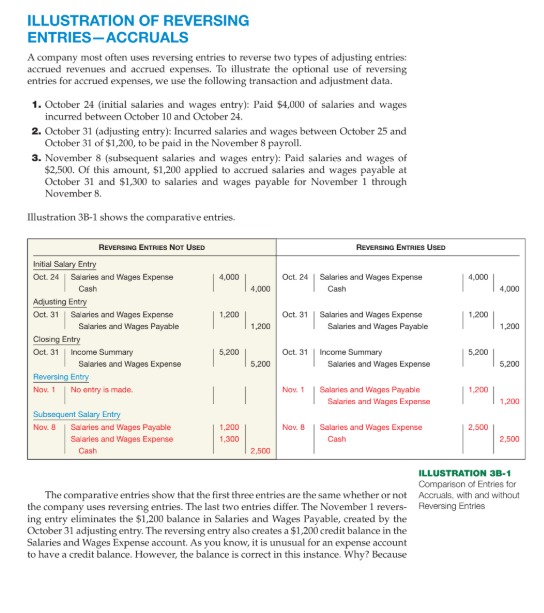
Intermediate Accounting, By Donald E. Kieso, Jerry J. Weygandt, Terry D. Warfield · 2016
As stated in IAS 10.8, entities adjust the amounts recognised in financial statements to reflect adjusting events. As outlined in ASC 855-10-25-1, the effects of subsequent events providing additional evidence about conditions at the date of the balance sheet, such as estimates inherent in the process of preparing financial statements are recognized.
Interpreted literally, this guidance suggests that any item estimated at the end of the period is adjusted, in the subsequent period, when the estimated amount becomes known. The cleanest way to make such an adjustment is to derecognize (reverse) the estimate and recognize the known amount.
However, the examples of subsequent events requiring derecognition / re-recognition in IAS 10.9 (settlement of a court case, bankruptcy of a customer, sale of inventories below cost, determination of the cost or proceeds of assets bought or sold before period end, profit-sharing or bonus payments, errors or fraud) indicate that simple estimates of incurred expenses need not go through such a rigorous process. ASC 855-10-55-1 provides comparable examples of items requiring adjustment (settlement of litigation that arose before the balance sheet date, and events representing the culmination of conditions that existed over a relatively long period), while ASC 855-10-55-2 lists those that do not (stock or bond sales, business combinations, settlement of litigation that arose after the balance sheet date, natural disasters, changes in estimated credit losses, changes in fair value or foreign exchange rates, and new commitments or contingent liabilities).
Additionally, IAS 10 | ASC 855 apply only until the statements are authorised for issue or issued. After that, a 10,000 estimate that turns out to be 11,000 is a change in estimate, recognised prospectively (IAS 8, ASC 250). That, plus its materiality, is a strong basis for this approach.
12/31/X0 | 31.12.X0 |
|||
Selling expenses: Electricity |
10,000 |
||
Accrued expenses: Electricity |
10,000 |
||
As outlined in IAS 37.11.b, accruals are liabilities for goods or services that have not been invoiced or agreed to. e.g. payroll or vacation pay or that must be estimated, such as utilities consumed but not yet invoiced. While ASC 450-20 does not formally distinguish between contingent liabilities and accruals, the same general approach is also common GAAP practice.
This implies that, for example, if an expense item that must be recognized at period end must be estimated, it should not be recognized as a payable, but as an accrued expense. While IAS 37 only addresses liabilities, by analogy the procedure would be applied to income items so that accrued income, rather than a receivable would be recognized. In practice it is also common to refer to items not yet invoiced as unbilled revenue. For example in US GAAP XBRL UnbilledRevenuesMember is defined as "Unbilled amounts due for services rendered or products shipped..."
Note: this element is distinct from UnbilledContractsReceivable because it is based on noncontract transactions. Specifically, "Unbilled amounts due for services rendered or to be rendered, actions taken or to be taken, or a promise to refrain from taking certain actions in accordance with the terms of a legally binding agreement between the entity and, at a minimum, one other party. An example would be amounts associated with contracts or programs where the recognized revenue for performance thereunder exceeds the amounts billed under the terms thereof as of the date of the balance sheet."
Also note: the IFRS XBRL taxonomy does not include an unbilled revenue item, but it would be possible to add it as an extension.
1/1/X1 | 1.1.X1 |
|||
Accrued expenses: Electricity |
10,000 |
||
Selling expenses: Electricity |
10,000 |
||
1/31/X1 | 31.1.X1 |
|||
Selling expenses: Electricity |
11,000 |
||
Cash |
11,000 |
||